|
Sharing Experience with Cultural Heritage: Southern Taiwan University of Science and
Technology and University of Japan co-organized "Summer Chinese Study Group.”
Southern Taiwan University of Science and Technology and University of Japan co-organized "Summer Chinese Study Group" for the second year. Last year, a total of 19 Japanese students came to Chinese Language Center, Southern Taiwan University of Science and Technology, to learn Chinese and experience Taiwanese culture. Through the activity, the relationship between the two universities was greatly enhanced. This year, a total of 9 Japanese sister school students came to Southern Taiwan University of Science and Technology to attend a 4-week course Chinese study group. After the two universities become sister schools in 2009, both teachers and students communicate very closely; STUST has sent a number of exchange student to Japan to study. Since last summer, the two schools have cooperated in promoting Chinese learning group activities, so as to develop the friendship between both teachers and students.
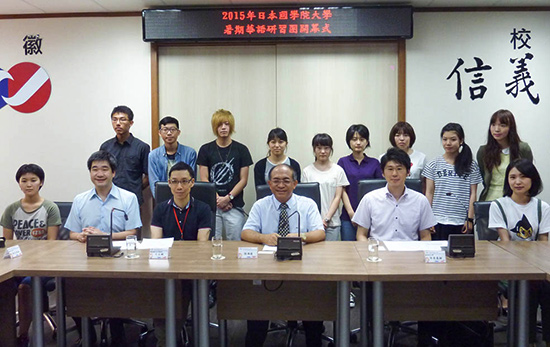
【Sharing Experience with Cultural Heritage: Southern Taiwan University of Science and Technology and University of Japan co-organized Summer Chinese Study Group. Here are the teachers, students and executives.】
Deputy President Chang of Southern Taiwan University of Science and Technology welcomed teachers and students from the sister school from Japan and encouraged all the students in learning Chinese to acquire more understanding of Taiwanese culture and experience, such as Taiwanese cuisine in particular historical and cultural ancient Tainan, great historical characteristics of temples, a variety of local arts and traditional cuisine.
In addition to improve the students’ basic language skills, the study group courses covered such culture courses as aboriginal dance, mask rendering, Hakka blue dye, Taiwanese cuisine and other multi-cultural curriculum, so that students could have profound experience with Taiwanese culture. They could bring what they learned from the practical curriculum back to Japan. Also arranged for the students were visits to various places in spare time to enhance their understanding in Taiwan's culture and their experience with Taiwanese cuisine. Deputy President Chang expected that the students of this group could have a rich and enjoyable learning trip. He looked forward to more exchanges between the two universities.
|