|
The goal of the second phase of the USR project of "Local Creation and Dissemination of Cultural Heritage—Fucheng vs Yuejin" of the Ministry of Education, which Southern Taiwan University of Science and Technology is implementing, is to raise the local concern about cultural sustainability. As for how to preserve culture through creative ways to achieve the goal of sustainable development, the kinetic energy of the community will be the key. The team was led by the Chief Executive of the Social Responsibility Promotion Center of Southern Taiwan University of Science and Technology to the Sishu Community. The topic was "How to Promote the Cultural and Creative Development of Residents in the Community."
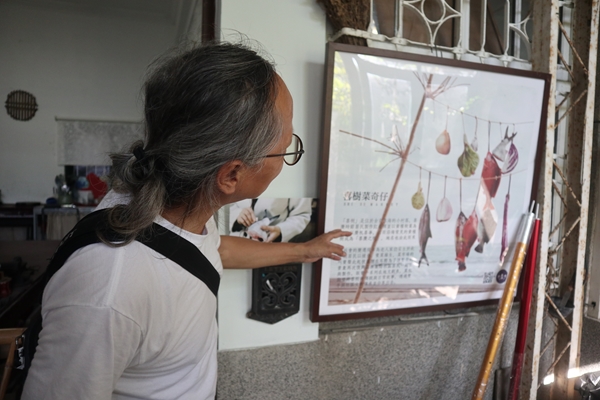
[Prof. Teng-An Guo of Tainan University of Applied Sciences was introducing the scene of the Sishu vegetable market.]
The Sishu Marketplace team was established by Prof. Teng-An Guo of Tainan University of Applied Sciences. He uses his own family old house as Sishu Story House to open a senior art classroom. In addition to cultivating local grandpa and grandma's art painting skills, it is also the cultivation of the elderly’s beauty and aesthetic education. They record and save the Sishu local stories by publishing the picture books of "The Legend of the Turtle" and "The Story of the Soldiers of the Soldiers" by the grandfather and grandmother telling of the local stores and the scenes that painted the local story and local culture. This approach is similar to the Shennong Street field of the USR project of the Southern Taiwan University of Science and Technology. The Shennong Street team of the USR project of the South Taiwan University of Science and Technology consists of two USR innovation courses, "Explore the City" and "Local Culture and Urban Cultural Creation." Each semester the students have to adopt the old house. In addition to visiting Shennong Street to learn about the trade and living space culture of the suburban merchants in the past (Ching Dynasty), they also conducted interviews and field surveys with residents near the old house to collect the most basic old house culture. The materials were then interviewed and reorganized by the project team. At present, they have published "The Story of Seeing the Old House in the Five-Channel Port 4--Shennong Street", "The Story of Seeing the Old House in the Five-Channel Port 5--Shennong Street 2" and "The Story of Seeing the Old House in Five-Channel Port 6--Shennong Street: 20th Anniversary of Street and Street Story.”
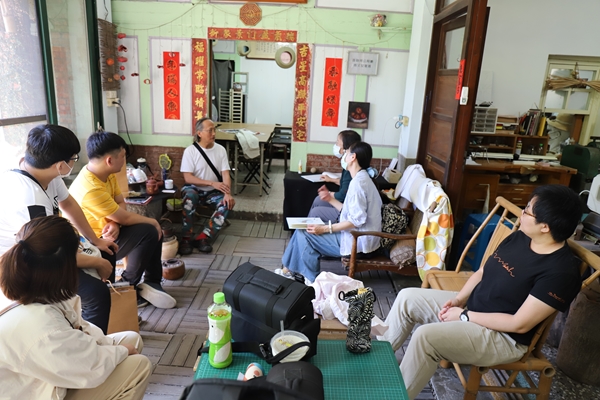
[Southern Taiwan University of Science and Technology's "Local Creation and Spread of Cultural Details-Fucheng vs Yuejin" USR project team was having an exchange with Prof. Teng-Aan Guo, Tainan Applied Science and Technology University.]
In addition to the picture books, the Sishu Story House offers a variety of food and cultural creations that can be seen in the various vegetable markets produced in Sishu. Sishu District is close to the sea, so the grandpa and grandma in the craft classroom course were the first to make fish from the seaside into a fish bag. When the Southern District Office wanted to hold an exhibition, grandpas and grandma took the fish bag for display. Unexpectedly, it became popular and gradually developed a variety of creative small items that are common in the market, including seafood and vegetables. This creative idea gave the Taiwan University USR project Salt Water team a great incentive. They used the bee cannon as the theme to lead the elders of the original senior course in the second phase of the "Tinzhi Bamboo Art Classroom." Then they integrated the saltwater bee cannon culture through creativity and bamboo weaving culture to develop the ancient bamboo bee cannon city to decorate the Lantern Festival Lantern Festival in 2021.
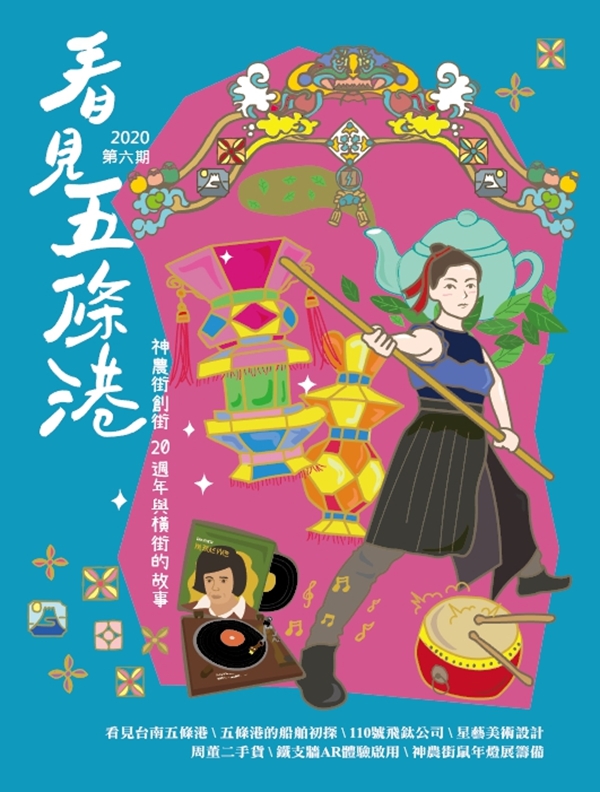
[The cover of "The 20th Anniversary of Seeing the Five-Channel Port 6—Shennong Street and the Story of Hen Street," published by the UST Project Team of Southern University of Science and Technology.]
This exchange activity also went deep into the Sishu community, surveying how to use abandoned houses, paintings, and installation art to activate the idle space, and the wall of Haian Street Art Museum, which was previously resurrected at Haike Road and Shennong Street. The original intention is the same, but it also gave Shennong Street team some ideas to do some make-up for the Beishi Port Heritages.
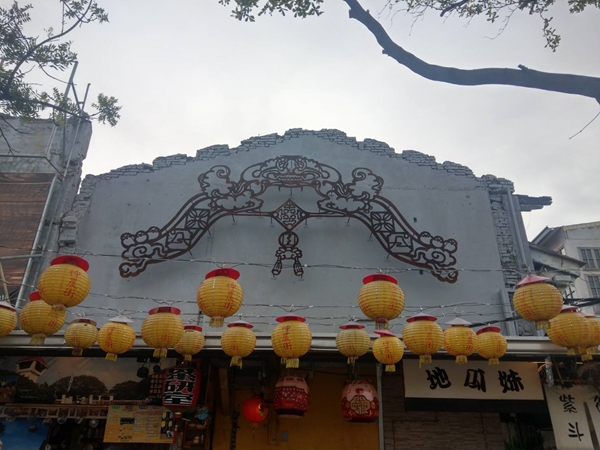
[Reconstruction of the "Iron Wall" of Art Museum at the intersection of Haian Road and Shennong Street]
Deng-Maw Lu, President of South Taiwan University of Science and Technology, said that the USR team of the university went out of the business field and discussed and communicated with other teams. It is very worthy of encouragement, so as to be more robust and grow under mutual agitation. It is hoped that the UST Center of South Taiwan University of Science and Technology will hold more communication activities to create local life by truly implement the university's social responsibilities.
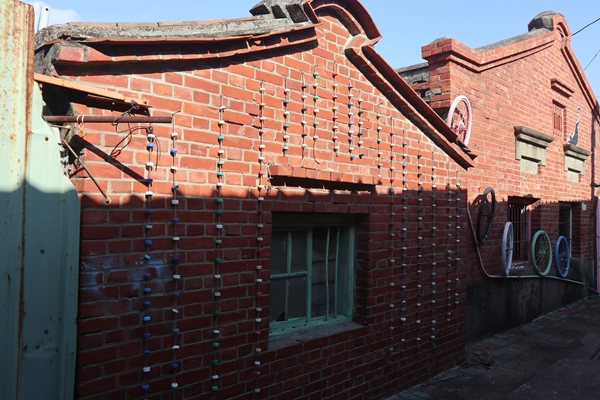
[The installation art made of plastic bottle caps in Sishu Community shows a strong concept of environmental protection.]
|