|
STUST recently held the 2022 USR Achievement Presentation Conference "Mountain, Sea, City, and Rural Areas—Care about Local People and Local Business." Students served as the panelists at the presentations, co-constructing the discussion and influence of USR achievements from the perspectives of communities and students.
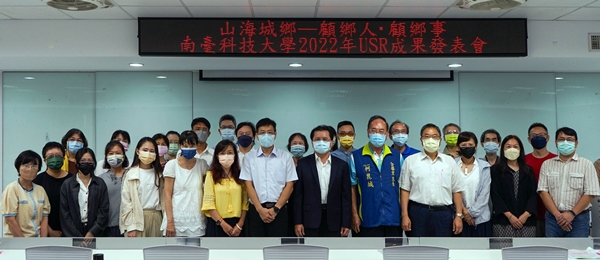
[A group photo of the 2022 USR Achievement Presentation Conference at STUST]
The theme of this event "Mountain, Sea, City, and Rural Areas" means that the USR project team of STUST has traveled all over the mountains, seas, cities and villages around Tainan, while the "care" in "Care about Local People and Local Business" has two meanings. On one hand, it "cares about" local issues through keen observation of the surrounding things and use university energy to change the multiple possibilities of the status quo; on the other, it "takes care of" not only the needs of the field but also the teachers and students working there. With both, professional development and diverse possibilities can be promoted in practice.
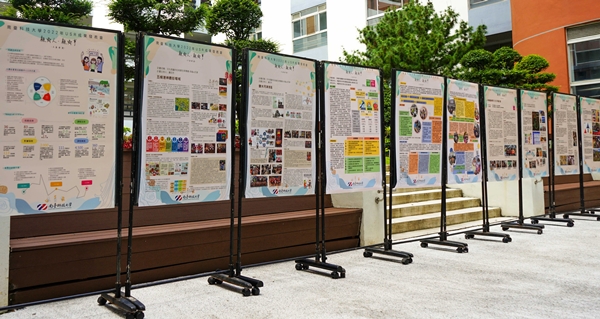
[The poster presentation at the 2022 USR Achievement Conference of STUST]
In the event, the project directors of various teams of STUST talked about the ideas, implementation plans, and results of the project, trying to establish a mechanism for students to construct USR discourse. The students talked eloquently about the inspiration of their profession and life from their in-depth local experience. De-yu Chen, a student from the Department of Multimedia and Computer Entertainment at STUST, said that the biggest gain from participating in the USR project is to use his major study of multimedia and computer entertainment to create block games and cultural and creative products with the Shennong Street and Yanshui-Yuejin Port communities. He has learned to deeply understand the social practical significance of local creation in action. Di-peng Ouyang, a graduate of the Department of Information and Communication at STUST, said that in the past, because of his participation in the USR project, he had the opportunity to go deep into the Kunyu community and record precious cultural assets with imaging expertise, arousing the public's attention to local issues. The experience has helped him a lot in his engagement in video creation. Yong-ru Yang, An-chen Zheng and You-chen Fu, students of the Department of Pop Music Industry at STUST, said that participating in the USR program made them believe that art can change the world as they learned to work with different groups and allow broader imagination to happen in future music. Pei-zhen Wu, Yu-gen Chen, and Tsai-fen Yu, students of the Department of Visual Communication Design at STUST, said that by participating in the USR project, they studied Zuozhen culture, reproduced the value of Houkeng Ancient Road, and translated the stories and knowledge of the field. Their works developed into a commercial design as they accumulated experience in planning exhibition activities. The process was touching, full of challenges and rich harvest.
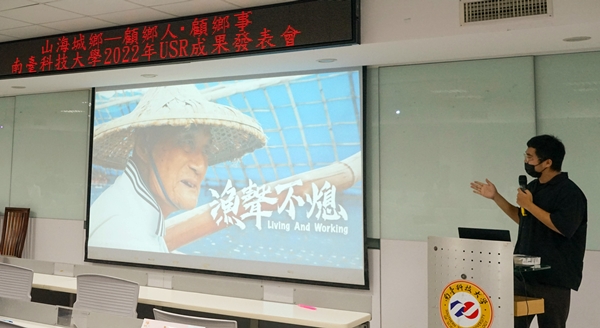
[Di-peng Ouyang, a student of the "Youth and Elderly Co-Creation" team of STUST, was sharing his video documentary work.]
Chief Geng-han Lin of Shigang District, Tainan City, Chief Kun-cheng Ke of Jinhua Village in Southern District, Academic Director Jun-liang Chou of Elementary School in Jiali Village of District Yanping, Mr. Wen-yu Su (founder of the ROC DIY Learning Association, and Chief Executive Tsai-chin Zheng of Tainan City Cultural Association, and all the other field partners agreed that the change of the university's energy investment to the community is obvious. Through regular dialogues, the partners can build consensus, introduce professional practice to link regional resources, develop multiple thinking paths for local issues, and refine local characteristics and activate the community management model. Teachers and students from STUST drive the community forward with their enthusiasm, working together with the residents to help the community identity take root in the children of elementary schools and middle schools from an early age. The field partners also praised the growing confidence and maturity of STUST students in social practice, and hoped that STUST and the community can grow together and cooperate in a sustainable manner.
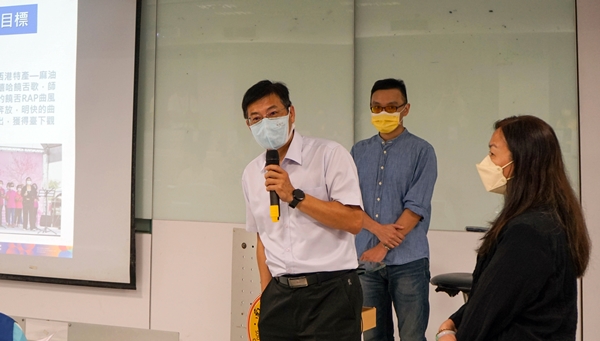
[The District Chief of Shigang District was sharing his experience of participating in the project.]
Chi-liang Chu, Vice President of STUST, said that STUST has been supported by the Ministry of Education since 2016 to implement two university social practice projects. In 2010, a first-level administrative unit "University Social Responsibility Promotion Center" was established to specialize in social practice programs. The integration of school affairs support and value-addition, the implementation of teacher rewards, and the expansion of student participation, and the incubation of 5 in-school seed projects—have all become the strongest backing of each project team. On-campus exhibitions will continue to give faculty and students who missed the presentation a chance to experience it.
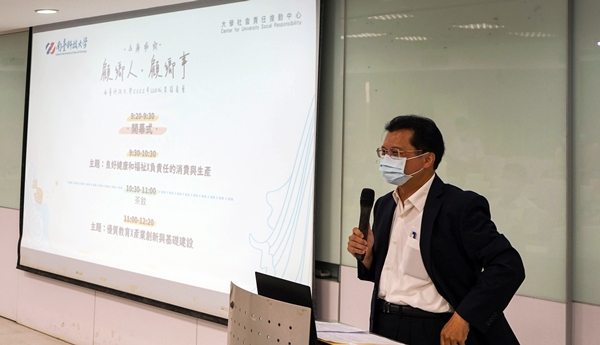
[Chi-liang Chu, Vice President of STUST, was delivering a speech at the presentation conference.] 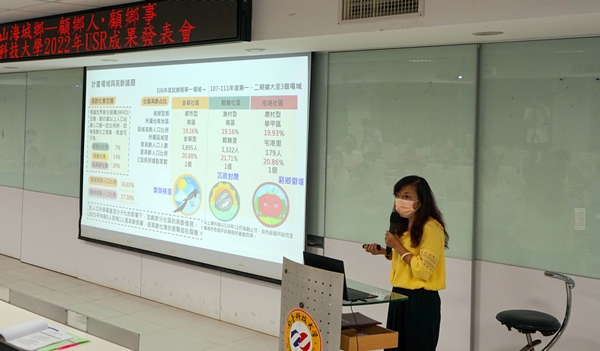
[Director of the "Youth and Elderly Co-creation" team of STUST was sharing the implementation results of the team.] 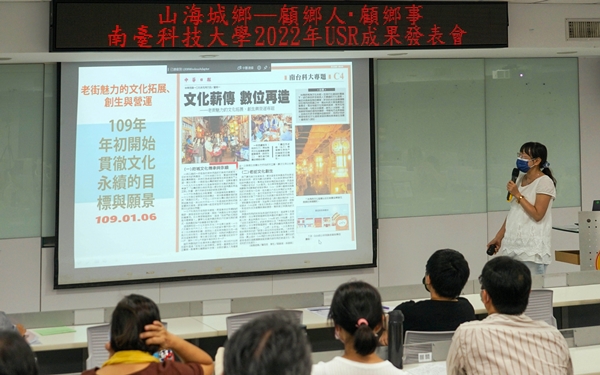
[Director of the STUST's "Cultural Heritage" program was sharing the implementation results of the team.] 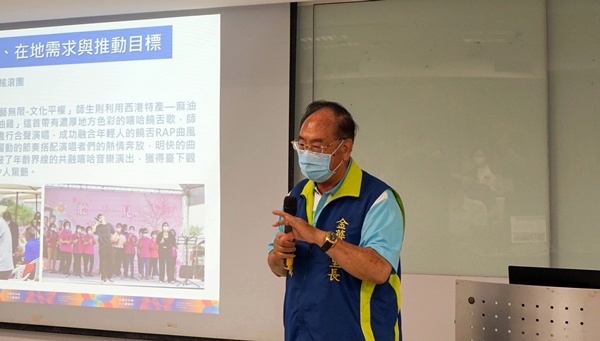
[Chief Executive of Jinhua Village was sharing his experience of participating in the project.] 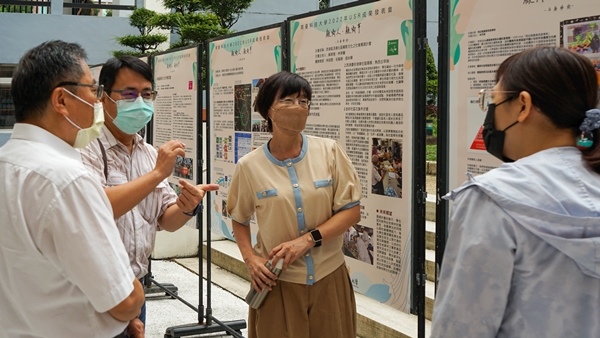
[“The Legend of Siraya Agriculture in English” was sharing the implementation results of the team.] 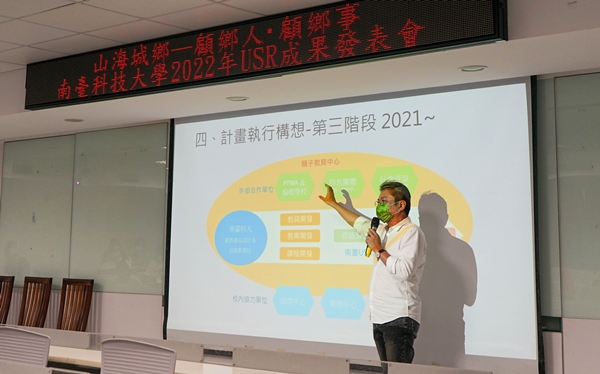
[Director of the "Improving Technology Literacy in Remote Rural Areas" program was sharing the implementation results of the team.] 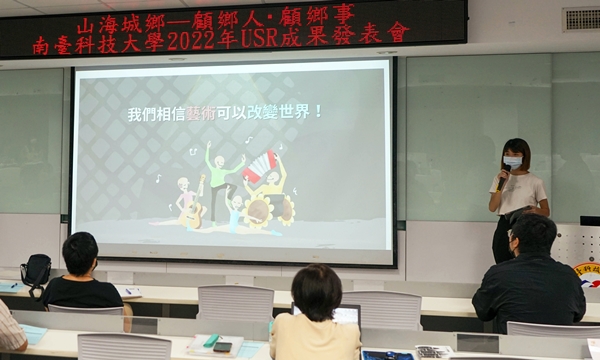
[Students from the STUST's "Art Unlimited for the Disabled" team was sharing the implementation results of the team.] 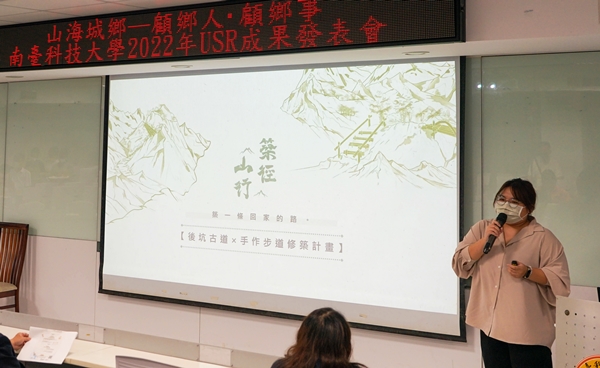
[Students from the "Zuozhen Local Creation" team of STUST was sharing the implementation results of the team.]
|