TAINAN, Taiwan — Southern Taiwan University of Science and Technology (STUST) hosted its inaugural Human Capital × AI: The UNSDG Sustainable Business Challenge, featuring a poster exhibition from November 9 to 13, 2026, at Jixian Hall (4F, Center for General Education), followed by an awards ceremony on November 13. The competition was supported by the Ministry of Education Youth Development Administration’s Career Guidance Subsidy Program for Colleges and Universities. It was organized by the Department of International Business in collaboration with the Department of Mechanical Engineering, the Department of Applied English, and the Office of International Affairs (OIA). The competition encouraged international students to combine social and emotional learning (SEL), generative AI, entrepreneurship, and the United Nations Sustainable Development Goals (SDGs) to develop business ideas addressing real-world social needs.

Open to all international students at STUST, the competition attracted 35 two-member teams, primarily from Southeast Asia. Following an initial screening, 20 teams were selected to present their proposals at the exhibition. Professor Lee-Anne Johennesse of the Department of International Business, who initiated the competition, said that sustainable solutions should involve more than apps or automated platforms. Participants were encouraged to consider how human connections, such as mentoring, peer support, and community networks, could create value in their proposed services. They were also asked to incorporate competencies from the CASEL framework into their designs.
Throughout the idea development process, generative AI was treated as a "third teammate," offering suggestions and helping students explore possibilities, while students remained responsible for the final decisions. Professor Johennesse explained, "Innovation requires not only generating possibilities with AI, but also considering who might be excluded, what assumptions might fail, and what people actually need. By identifying the limitations of AI and using human judgment to revise or rethink its suggestions, students can learn to use technology as a tool while keeping people at the center of sustainable solutions."
The entries were evaluated by an external panel comprising Professor Chung Mo Koo of CTBC Business School and Lecturer Ching-Wen Kao of National University of Tainan. The judges assessed the projects based on four criteria: Human Problem & UNSDG, Human-Centered Solution + SEL, Business & Revenue Model, and AI & Team Reflection. The winners were:
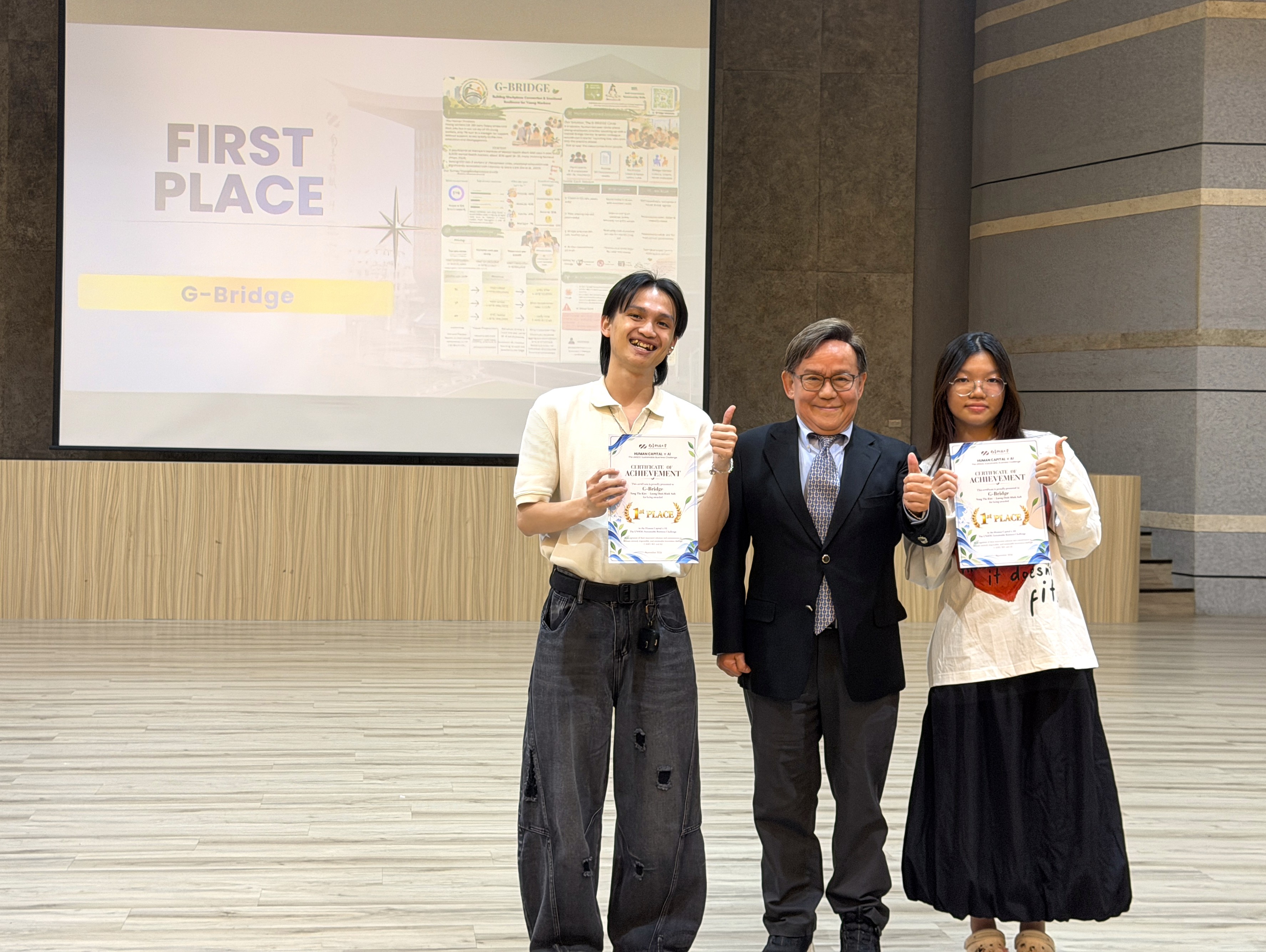
First Place – G-Bridge (Vong The Kiet and Luong Dinh Minh Anh): Proposed a workplace support initiative to build connections and strengthen emotional resilience among young workers through peer support circles and guided dialogue. The project received the highest scores for its human-centered approach and critical reflection on the role of AI.
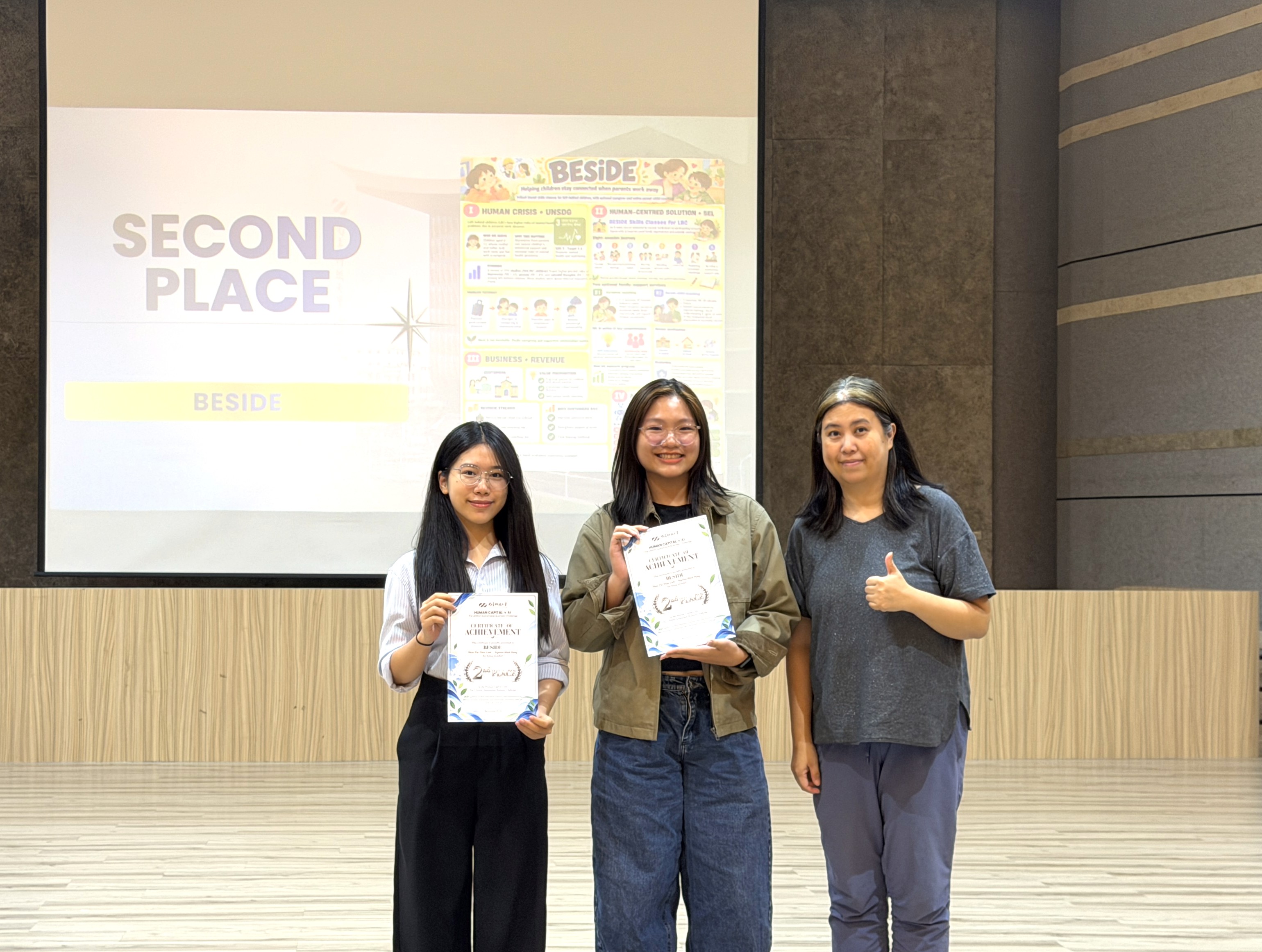
Second Place – BESIDE (Phan Thi Thuy Linh and Nguyen Minh Hang): Developed a school-based social and emotional learning program, with optional coaching for caregivers and parents working away from home, to help children maintain connections with their families. The judges recognized its clear identification of social needs and use of supporting evidence.
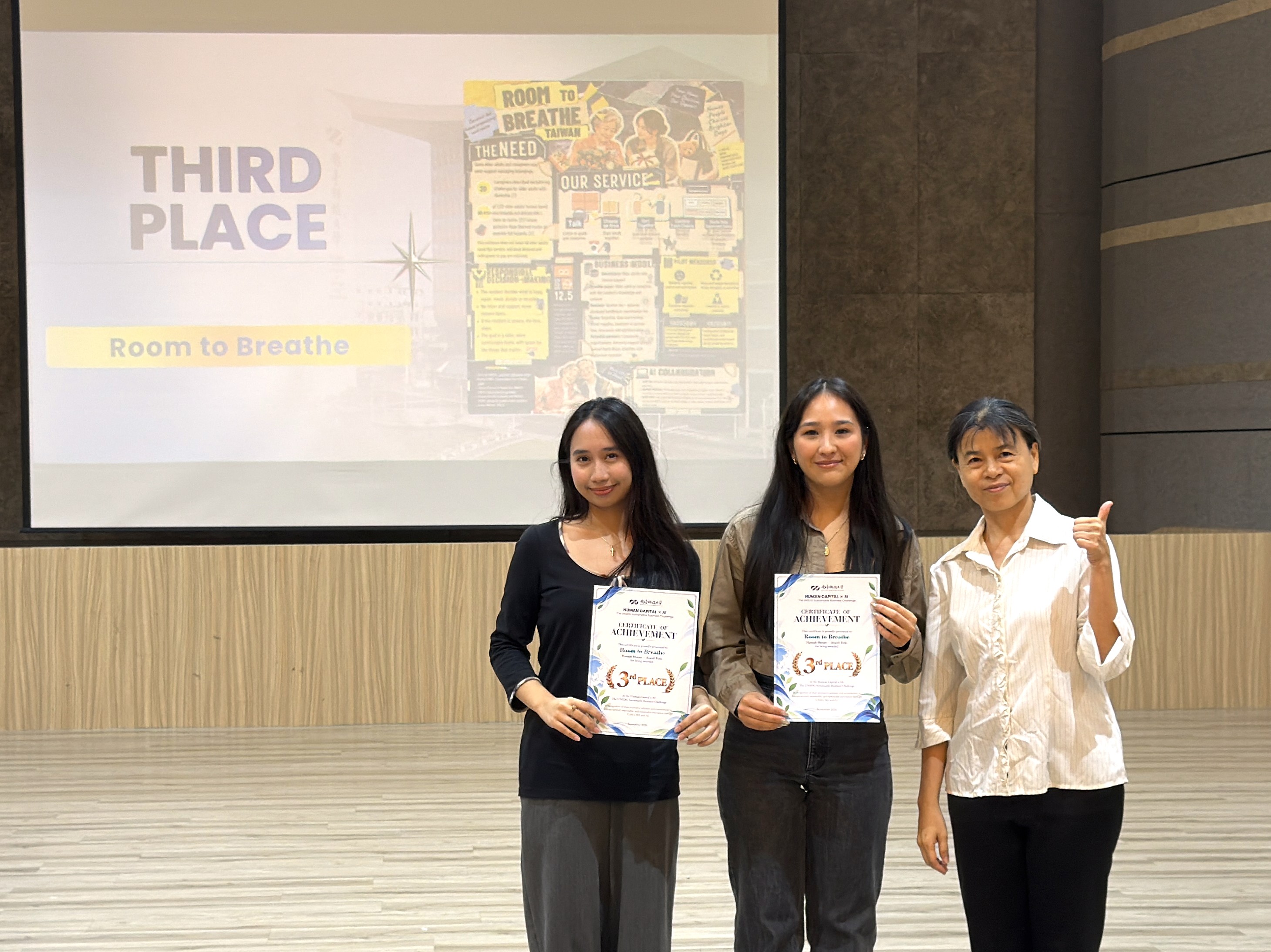
Third Place – Room to Breathe Taiwan (Hannah Hassan and Araceli Ruiz): Proposed a social enterprise centered on consent-based home organization and the reuse of household items.
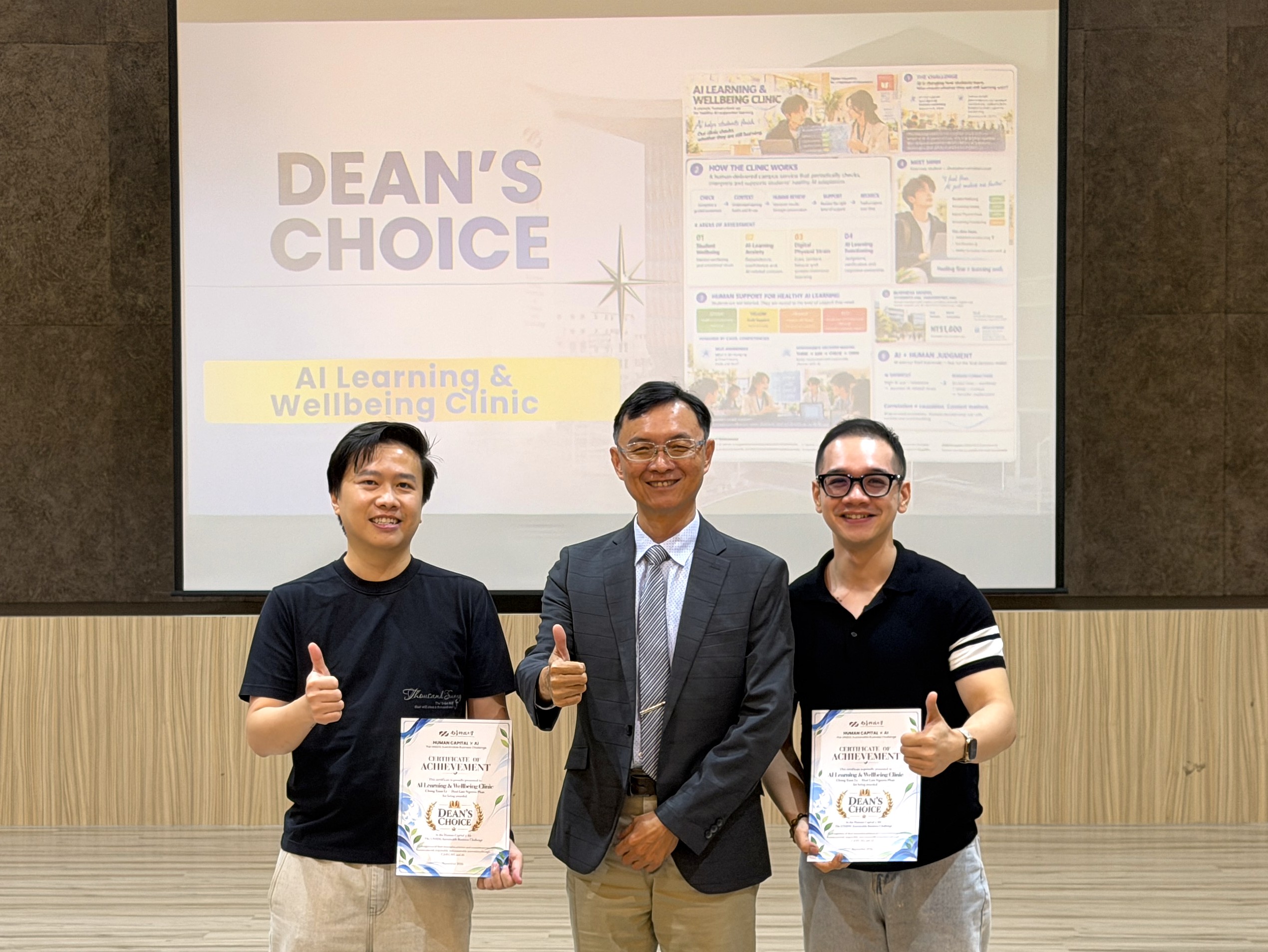
Dean’s Choice Award – AI Learning & Wellbeing Clinic (Chung Xuan Le and Hoai Lam Nguyen Phan).
People’s Choice Award – The Global Table (Arya Ananda Wangsanegara and Anar Enkhjargal).
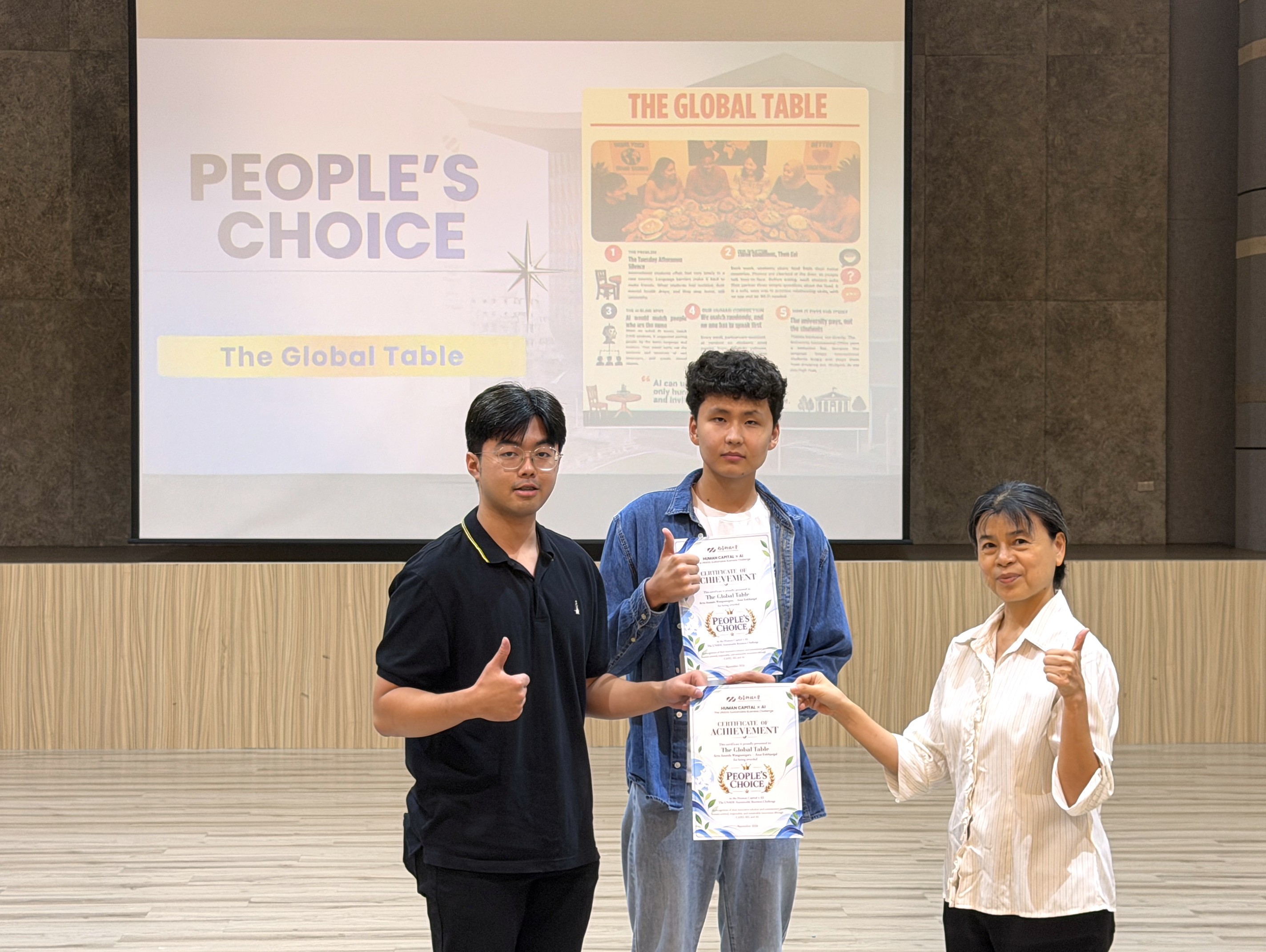
Professor Yi-Chu Hsu, Director of the Office of International Affairs and a co-organizer of the competition, said, "This competition gives international students an opportunity to share their experiences of living in Taiwan and turn their observations into proposals that respond to social needs. Building on this first event, we hope to open the competition to domestic students next year, giving local and international students more opportunities to exchange ideas and learn from one another."
Professor Johennesse also thanked Director Hsu, College of Business Dean Ching-Chung Lin, and the two judges for their support and guidance. She hopes the competition will continue to encourage students to apply empathy, creativity, and critical thinking when developing solutions to real-world challenges.